

KVVP shielded cable: three black technologies that make inverter interference disappear
author: Shenzhou Yongli Cable Tong
2025-05-15

In industrial automation control systems, the widespread use of frequency converters, PLCs and servo motors makes electromagnetic interference (EMI) one of the most troublesome problems for engineers. Signal distortion, equipment malfunction, communication interruption... the root cause of these problems is often insufficient cable shielding performance. With its three core technologies, KVVP shielded cable has become the ultimate solution to interference problems!
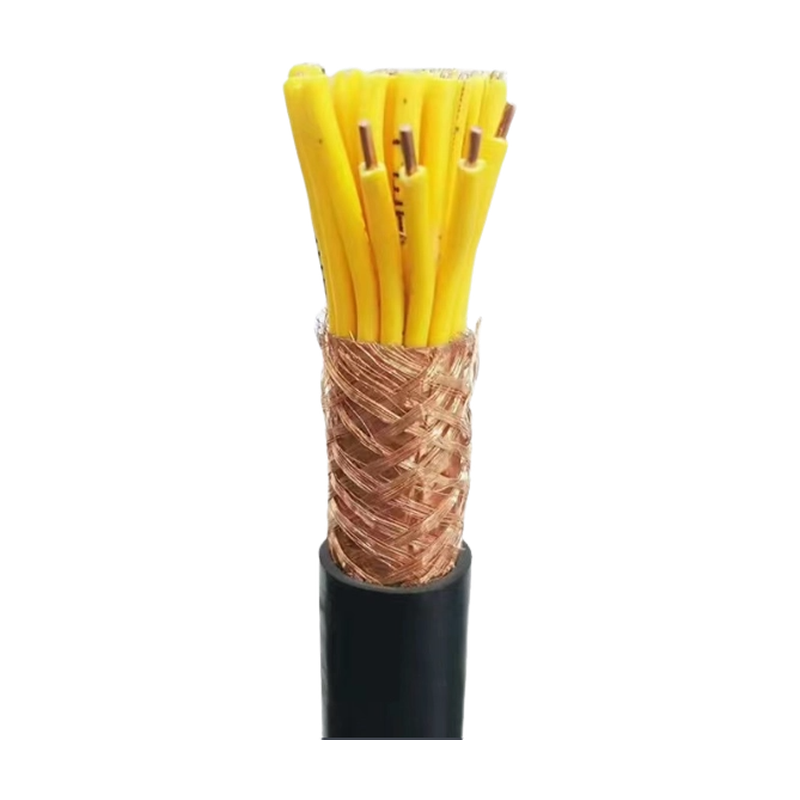
Black Technology 1: High-density copper wire woven shielding layer (coverage ≥80%)
The shielding layer coverage rate of ordinary shielded cables is often less than 60%, while high-quality KVVP cables use 32/* high-density copper wire mesh, and the measured shielding efficiency is as high as 70dB or more (ordinary cables are only 30- 40dB).
Comparison of laboratory data:
Unshielded cable: Signal distortion rate>50% near the inverter
Ordinary shielded cable: distortion rate is about 15%-20%
KVVP cable: Distortion rate <3%(compliant with EN50288 standard)
Application scenarios:
Control line between inverter and motor
Communication connection between PLC and remote I/O module
Black Technology 2: Tinned copper core +PE insulation layer, dual anti-interference
The KVVP cable not only has a shielding screen on the outer layer, but its conductor also uses tinned copper core to effectively prevent poor contact caused by oxidation. At the same time, high-density polyethylene (PE) insulation provides stable dielectric properties and reduces signal attenuation.
? Industry measurement cases:
The welding robot of an automobile manufacturer frequently stopped due to signal interference. After replacing the KVVP cable:
Failure rate dropped by 92%
Communication stability increased to 99.8%
Shopping tips:
Recognize the GB/T 9330-2020 standard
Use a multimeter to measure the shield resistance (should be <100Ω/km)
Black Technology 3: Double aluminum foil + drain line to completely eliminate inductive electricity
Some inferior shielded cables only use a single layer of aluminum foil, which is easily damaged and causes shielding failure. The high-quality KVVP cable uses:
Double aluminum foil wrap (100% coverage)
Tin-plated copper bar streamline (quickly deriving induced current)
? Essential knowledge for engineers:
In strong electromagnetic environments (such as near a substation), KVVP2 (double layer shielding) must be used
KVVRP (flexible structure) is recommended for mobile equipment (such as running cables)
How to distinguish between true and false KVVP cables?
Look at the cross-section: Use a blade to gently scratch the shielding layer, and the authentic copper wire will turn golden yellow (the inferior product may be copper-clad steel)
Measure continuity: Use a multimeter to measure the on and off of the shielding layer, and the resistance should be uniform and without sudden changes.
Combustion test: Genuine PE insulation layer self-extinguishes when it leaves fire (complies with IEC 60332 flame retardant standard)
conclusion
In the era of Industry 4.0, stable signal transmission directly determines production efficiency. Choosing a real KVVP shielded cable can not only reduce the frequency converter interference by more than 90%, but also extend equipment life and reduce maintenance costs.
? Upgrade your cable solution now and say goodbye to signal interference!
Selection Guide for Flame Retardant Cable Category A/B/C
YJV vs VV Power Cable Ultimate Match
Related Article

XLPE (cross-linked polyethylene) insulated solar cables are specialized for photovoltaic (PV) systems, combining XLPE’s thermal stability with resistance to UV radiation, extreme temperatures, and environmental stress. Compliant with international standards including IEC 60228, TÜV 2Pfg 1169, and UL 4703,
XLPE Insulated Solar Cable: Specifications and Applications

Copper twin and earth cable is a specialized wiring solution designed for low-voltage power distribution, featuring two current-carrying conductors and a separate earth (ground) conductor—all insulated and sheathed in a single jacket. Compliant with international standards including IEC 60245, BS 6004, and UL 1015, this cable is the backbone of residential, commercial, and light industrial wiring worldwide, valued for its safety, simplicity, and cost-effectiveness.
Copper Twin and Earth Cable: Specifications and Applications

Aluminum overhead cables are a cornerstone of long-distance power transmission, combining aluminum’s lightweight design with excellent conductivity-to-cost ratio. Compliant with international standards including IEC 60889, ASTM B230, and BS 215, these cables are optimized for aerial installation—trusted across global power grids, rural electrification, and infrastructure projects where overhead routing is efficient and cost-effective
Aluminum Overhead Cable: Specifications and Applications

XLPE (cross-linked polyethylene) insulated underground cables are engineered for reliable power transmission and distribution in buried environments, combining XLPE’s thermal stability with robust protection against soil corrosion, moisture, and mechanical damage.
XLPE Insulated Underground Cable: Specifications and Applications